Extract of Olive Leaf.
Beat the system and make your own Olive Leaf Extract tincture.
Leaves
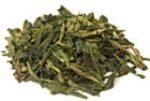
- Try to get fresh olive leaves of a suitable cultivar.
For a strong extract of olive leaf, Manzanillo or Mission olive leaves are known for having a good percentage of oleuropein but many of the other Olea Europaea cultivars should be fine.
Sub-species Olea Africana is particularly good for its cardiovascular and diuretic benefits.
The only leaves I know of, which do not contain sufficient oleuropein are the Chinese olive trees, so provided your tree is not a Chinese cultivar you should be fine.
- If possible pick the leaves in the mid-morning when any surface moisture has dried and process them within an hour or less.
Do not use blemished or dirty leaves.
Don't use leaves from trees in heavily air-polluted areas. - Be sure you know that the olive trees, or nearby trees, have not been recently sprayed with poison or copper sulphate to keep pests or mould away.
- If you use commercially dried leaves you may get acceptable results but the volatile constituents will have been lost, giving a less balanced product.
- Drying your own fresh leaves is rather pointless, as it takes more time and yields an inferior extract of olive leaf.
Ethanol
- Get a strong bottle of Vodka, 40% Abv. (alcohol by volume or 80% proof in the U.S.) for the extraction.
- Glycerine or vinegar can be used but will yield a weaker extract of olive leaf, will need longer to draw out the phytochemicals and may require heat to get a useful result. Other flavoured spirits are not suitable although rum is sometimes used.
- If you can get 96% pure grain alcohol (ethanol) you can use this.
Dilute it to approx. 40% by mixing 1 part alcohol to 1.4 parts purified water.
In other words for every 100ml of alcohol add 140ml of water.
Other items you will need:
- A wide-necked glass pickle jar or similar with sealable lid.
I personally avoid any plastic-type containers regardless of how alcohol-resistant they are supposed to be. One never knows what chemicals will leach out into your tincture. - Muslin or culinary cheesecloth to strain /wring the final product. (Not bleached).
It may be easier to use a nut bag after first straining the bulk of the leaf through a sieve. - Smaller amber glass dropper bottles with a slow dropper to hold and dispense the extract of olive leaf. This you will only need 2 weeks after you start your tincture. Keep your old tincture bottles or purchase new ones on line.
That's it!
To start off this is all you need to make a useful extract of olive leaf.
If the bug bites and you wish to make a variety of tinctures for your home dispensary, you can purchase a still to make your own
ethanol and a wine press to get a better yield from your herbs.
This can reduce the cost dramatically per bottle of tincture and the equipment will pay for itself in a year or two,
depending on how much tincture you use.
A suitable shredding machine can also save a lot of time. You can try a kitchen blender and add a little of the alcohol to keep the mixture moving back to the blades. If you don't have a blender, a chopping knife will do for small quantities.
Method :
Before starting your olive leaf extract have the Vodka or diluted ethanol
(+_ 40% Abv) and glass jar ready and washed.
You will need enough alcohol to comfortably cover the shredded fresh leaves.
If you are using dried leaves you need enough to cover them plus about 1" (25mm) as they will absorb some of the alcohol and must
always stay covered.
To get an idea of how much alcohol solution you need for your extract of olive leaf, weigh your leaves in grams.
If using fresh leaves, multiply the number of grams by 3, and have that number in ml. of Vodka or 40% alcohol solution available.
If using dried leaves, multipy the number of grams by 5, and have that number in ml. of alcohol solution available.
For example if I use 100g of fresh leaves, I will need to have at least 200ml to 300ml of Vodka available.
If I use 100g of dried leaves, I will need to have 500ml of Vodka available to cover the leaves.
I may not need it all, depending on the moisture content of the leaves, but it is better to have it ready.
1. Chop and shred fresh leaves into a mulch and pour immediately into the glass jar. Cover with dilute alcohol.
Stir to release bubbles so that the chopped leaves remain covered.
If using dried leaves, break them up into tea-leaf size, put in glass jar and cover with dilute alcohol + another inch (25mm) above the level of the leaves. Shake or stir until the leaves sink.
2. Seal the glass jar and place in a dark place at room temperature.
3. Every day shake the glass container and make sure there is always sufficient alcohol to cover the leaves. If you used dry leaves they will absorb the alcohol solution so make sure to top it up if needed.
4. After 2 weeks the tincture should be of a good strength and it can now be filtered and bottled.
5. Place your muslin or cheesecloth over another container and support it around the edge while you pour your tincture into it.
Once it has filtered through you can wrap the muslin around the rest of the plant matter and wring it to get the maximum liquid out.
Instead of throwing the spent herb away, you can place it in a new mix of ethanol solution or Vodka and seal. Filter and use this solution when you are making your next batch of tincture to make it a little stronger.
If there is too much sediment in your tincture, seal the container, let it settle (in a dark place) and then pour off the pure liquid into amber dropper bottles.
Alternatively, you can filter it all through suitable filter paper.
A little sediment is not a bad thing.
Congratulations!
You now have your own brand of olive leaf extract tincture!
Test it out by taking a 1/2 teaspoon of your extract of olive leaf twice a day in a little water to gauge the strength and note how many drops this is equivalent to.
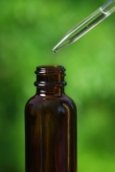
You will now have to wait for an opportunity to test your extract of olive leaf in the real world where it counts. If it works, you have just made yourself less dependent on others for your health and well-being and more able to fend for you and your family in times of crisis.
Note:
An ethanol solution absorbs into your stomach best at about 20% to 25% ethanol. Any stronger tends to cause the stomach to move it
on to the duodenum.
That is why the quickest effect will take place if you mix your 40% extract of olive leaf in about an equivalent amount of
water when you take it.
Do not mix it to this concentration before needed as it will not be sufficiently well preserved.
If the tincture seems too weak, experiment with different leaves, longer soaking times and less ethanol solution (provided the herb always remains covered).
Enjoy the benefits of your new endeavour.
Sign up to our newsletter for special offers and tips about olive leaf extract.
Don't have much time to read? Our brief newsletters cover all you need to know and you won't miss out on our special offers either.
If on mobile device, to view or add feedback click on "Full Site" tab.
Tell Us How Your Tincture Worked Out
Have you tried making a tincture?
What did you use?
How did it work out?
Do you have any tips for our other readers?
Feel free to tell us about it here.
What Other Visitors Have Said
Click below to see contributions from other visitors to this page...
Tincture started
Hi,
Just started my tincture today. Thanks for the tip on using a blender. It worked great and was really quick and easy to get the leaves shredded. I’m …
Tincture started
Hi,
Just started my tincture today. Thanks for the tip on using a blender. It worked great and was really quick and easy to get the leaves shredded. I’m …
Olive tree identification
Question:
Hi. I'm just about to try making this. I'm not sure what sort of olive tree I have. Are you able to tell me how to identify if it is a Chinese …
Mr. Excited Investigator.
I'm 77 y.o., just into middle age - live in the middle of a hundred acre olive plantation converted, for economic reasons, to a golf course with over 1000 …
What is my tincture strength?
Question:
We have been making Olive Leave Extract recently. Looks like it is good. We base it on 40% alcohol.
2 Questions:
- How fine do you cut the …
Ethanolic Olive Leaf Tincture Taste
Question:
Is it supposed to taste very bitter? Just want to make sure it's turned out correctly :)
Answer:
Yes, that is a sign of a well-extracted …
Success Making Olive Leaf Tincture
I followed your instructions and I am now onto my 3rd batch.
I was amazed and delighted when I got requests for more from friends I gifted samples to. …



Click for Quick Search
Comments
Have your say about what you just read! Leave me a comment in the box below. Note: I can't give medical advice. See dosage page for dosage.